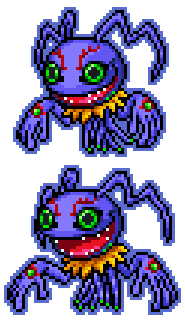
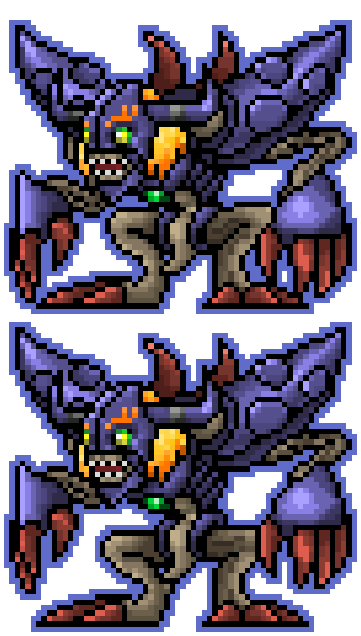

In the previous two articles, we traced the evolution of this project: starting as a 17,000-line Python monolith floating over the Linux desktop, and subsequently transformed into a living cellular automaton governed by Conway’s rules across File Island.
We now had an ecosystem where cells reproduce, wild fauna competes for forage, and biomes evolve organically. However, a pure simulation runs the risk of becoming a glorified screensaver: mesmerizing to watch for ten minutes, but lacking actionable player agency.
This is where the defining icon of the Digimon mythos enters: the Digivice.
The Digivice is no ordinary handheld console; in franchise lore, it serves as the conduit bridging the soul and willpower of a human child with the raw data packets of their digital companion. In our game, the Digivice becomes the interactive bridge between the cold mathematical determinism of the cellular automaton and the warm analog nostalgia of 90s Virtual Pet husbandry.
In this final installment, I will break down the interface architecture, the symbiotic dynamics between the Digimon and the grid, the rigorous calculation of Care Mistakes, and our rhythm-assisted combat engine.
1. The Digivice Interface: Retro LCD & Tactical Console
One of the biggest design hurdles was striking a balance between the aesthetic charm of monochrome liquid-crystal displays (LCD) from vintage V-Pets and the practical need to manipulate a complex grid in real time.
The solution was partitioning the screen into four distinct functional zones:
1 | +-------------------------------------------------------------------+ |
The Central Viewfinder & Automaton Symbiosis
The central area displays the live game grid. Unlike standard Conway cells, the active Digimon occupies a 2x2 cell footprint and moves with physics decoupled from the cellular tick rate:
- Apex Predator: As it walks, the Digimon physically crushes living cells beneath its feet. Its mere presence acts as a natural population regulator, curtailing cellular runaway within its roaming radius.
- Waste & Interference: When the Digimon relieves itself, it deposits a solid Glitch block. This block is immutable under Conway rules, serving as an impassable obstacle that deflects Gliders and disrupts neighboring oscillator patterns until the Tamer cleans the tile.
- Emotional Alerts: If the Digimon enters a critical state, it projects thought bubbles: a flashing meat icon if hunger hits zero, sweat droplets if energy is exhausted, or a skull if it contracts a bacterial infection. If a Care Mistake is imminent, the viewfinder bezel pulses crimson.
2. The Care Action Bar & Tamer Console
The bottom panel recreates the iconic commands of 1997 Bandai hardware, adapted to physically interface with the simulation grid:
| Icon | Command | Digimon Effect | Cellular Automaton Impact |
|---|---|---|---|
| 🍖 | Feed | Meat: +2 Hunger, +1g Weight. Vitamin: +1 Strength, 0g Weight. |
Spawns a static data block on the forward tile for the Digimon to pursue and devour. |
| 🥊 | Train | Burns weight and elevates critical hit rates in battle. | Freezes the local cell cycle to spawn a Conway training dummy for a timing minigame. |
| 🚽 | Clean | Prevents bacterial buildup and biohazard outbreaks. | Sweeps a digital broom that purges all Glitch cells in a 5x5 tile radius. |
| 💡 | Light | Allows the Digimon to sleep and replenish its DP gauge. | Freezes the automaton within a safety perimeter so cells cannot overrun a sleeping pet. |
| 💊 | Heal | Cures post-battle scars and intestinal infections. | Injects disinfectant data packets into the creature’s biometric stream. |
The Tamer Console (Hacking Conway)
Mounted on the right side are tools exclusive to the human player. Rather than standard pet care, these belong to the “Hacker/Tamer” toolkit and consume a regenerating pool of CPU Energy:
- Injector Brush: Enables direct clicking on any empty cell to manually inject live cells. Useful for guiding a starving Digimon toward food deposits or steering wild Virus swarms away.
- Firewall: Erects a row of impervious, closed-source barrier cells. They neither die nor reproduce, functioning as barricades to safeguard an injured rookie during recovery.
- Scold / Praise: If a stubborn Digimon refuses food or training with low stats, scolding raises its Discipline gauge, but releases acoustic shockwaves that clear nearby living cells.
3. The Evolutionary Mystery: Why Are There No Wild Megas?
In our game design, there is an unyielding biological law: only Baby, Rookie, and Champion (Adult) levels naturally spawn and evolve in the wild of File Island.
Higher tiers (Ultimate / Perfect and Mega) are biologically impossible without deliberate human intervention.
1 | Wild Nature (Autonomous): |
Why is this? Because the cellular automaton is merciless. In the wild, overcrowding, accidental collisions with Virus clusters, and seasonal data famines ensure that every creature inevitably racks up Care Mistakes.
For a Greymon to evolve into MetalGreymon, it must satisfy razor-thin conditions based on official Bandai parameters and Humulos telemetry:
- Care Mistakes $\le 1$: Starving for over 10 minutes, sleeping on its own waste, or leaving combat wounds untreated adds a strike. Exceeding two strikes permanently blocks the Perfect evolution branch.
- Win Rate $\ge 80%$: Must have fought at least 30 battles against local fauna and emerged victorious in 24 or more.
- Strict Weight Management: Must stay within ideal mass boundaries (e.g., $30\text{g} \pm 2\text{g}$).
- Discipline $\ge 90%$: Must never hesitate when given a battle command.
The Tamer is the only entity capable of creating a sterile “laboratory bubble” amidst the chaos of the automaton, administering sustenance on schedule, sanitizing the terrain, and orchestrating targeted training.
4. Combat Engine & “Support Megabytes”
When two creatures clash over territory, the simulation doesn’t resolve the duel with a dry dice roll. A tactical combat instance is engaged:
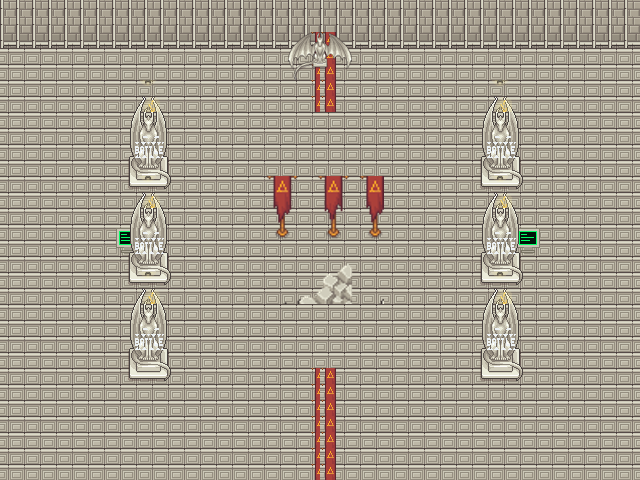
Combat runs as an automated best-of-3 exchange (up to 5 rounds maximum). Strength governs base damage, Defense mitigates incoming strikes, and Speed determines dodge windows (dodge_chance).
However, the player is not merely a bystander. Through the Digivice, the Tamer can actively intervene using Support Megabytes:
1 | # Combat round resolution with dynamic Digivice support |
During attack charge-ups, a resonance gauge oscillates across the Digivice screen. Hitting the physical button at peak resonance injects a high-frequency packet that overclocks attack power by 35% or triggers an emergency sidestep (whiff), saving your companion from fatal blows.
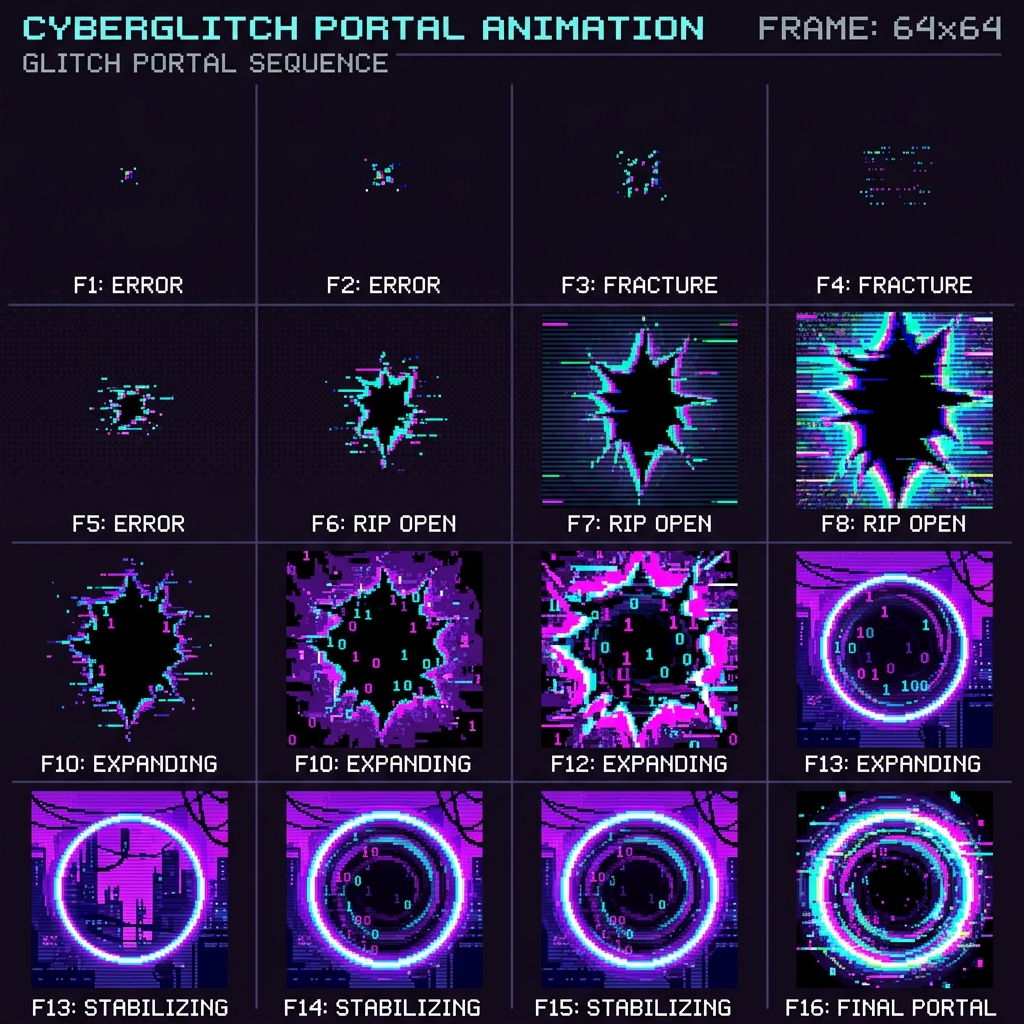
And if an encounter turns catastrophic—for example, if your Rookie is ambushed by a strike team of Metal Empire cyborgs—you can expend all your Tamer CPU energy to execute a Forced Extraction, ripping open a dimensional rift (glitch_portal_sheet.jpg) to pull your partner to safety before it disintegrates into raw binary.
5. Offline Simulation: What Happens When You Close the Game?
One of the thorniest engineering hurdles when merging a cellular automaton with a V-Pet is temporal persistence. A physical V-Pet continues ticking on its low-power microchip inside your pocket. But running Conway at 25 ticks per second for 8 real hours while an app is closed would obliterate device battery or corrupt memory upon resume.
To solve this, we implemented an Entropy & Macro-State Projection Model:
- Entropy Snapshot on Save: When exiting, the engine does not simulate individual cell trajectories. Instead, it records overall entropy indices and the ratio of stable patterns (Oscillators vs. Chaos).
- Statistical Time Leaps: Upon reopening the application, the engine measures elapsed wall-clock time (
time.time() - last_seen) and applies a stochastic transition function:- Low-Entropy Worlds (Dominated by Oscillators & Still Lifes): The ecosystem remained tranquil. The Digimon expended minimal stamina and absorbed harmonic Data packets.
- High-Entropy Worlds (Unchecked Overpopulation): The grid collapsed into Glitch cascades. You will return to find your Digimon exhausted, lightly bruised, and surrounded by biohazard waste.
- Cosmic Ray Injection (The Quantum Bit): To prevent the automaton from freezing into static loops while idle, the engine injects a “Cosmic Bit” (toggling a random memory cell) every 20 real-world minutes. This subtle burst of radiation triggers fresh cascading mutations, ensuring the Digital World is never identical twice.
Conclusion: The Definitive Ecosystem
Building this project has been one of the most intellectually rewarding and challenging systems design journeys I’ve undertaken. What started as an eccentric Linux desktop experiment using transparent GTK3 windows has matured into a genuine synthesis of computational artificial life and the golden era of monster-raising games.
By pairing Conway’s biological determinism with the tender yet unforgiving demands of Virtual Pet care, the Digital World is no longer just lore—it is a breathing, mutating wilderness alive within system memory.
All three articles are now live on the blog. I will continue sharing engine progress, interactive web viewfinder demos, and balance updates as we polish the final playable build.
See you in the Digital World, Tamers!