
Offensive Callback (IV): OSINT Pipeline and IP Intelligence
Fourth and last post in the Offensive Callback series. This one covers what happens server-side once the callback server has an IP address — the full intelligence enrichment pipeline that runs automatically for every new source IP that hits the system. The goal is to go from “an IP connected” to “here’s everything we know about that IP” with minimal manual..
Read moreOffensive Callback (III): Inside the Browser Stealer — merch.js
Third post in the Offensive Callback series. This is the deep dive into the client-side JavaScript payload — what I call merch.js internally, served as dl.full.min.js by the XSS dealer. It’s the piece that runs in a victim’s browser and does all the actual collection work. The file is about 10,000 lines minified and bundles several libraries: a hashing lib..
Read moreOffensive Callback (II): Dealers — Collection Points and Routing Engine
Second post in the Offensive Callback series. This one is about dealers: the server-side collection endpoints that define what happens when a request arrives and how telemetry gets delivered back. If you haven’t read the first post about the server architecture, start there. Here I’m going to focus entirely on the dealer system. What is a dealerA dealer i..
Read moreOffensive Callback: Multi-Protocol Passive Intelligence Collection
So I’ve been sitting on this for a while. I’ve been working on a tool that I call Offensive Callback — a passive intelligence collection server that captures inbound traffic across HTTP(S), WebSocket, DNS, and ICMP simultaneously, enriching every hit with browser telemetry, geolocation, and automated OSINT. This post is about the server itself: what it ru..
Read more
5ELG (I)/ Dealers wanna deal
In our previous post, we introduced 5ELG (https://github.com/jomoza/5ELG)This open-source project, with its modular “merca” (client-side) and “dealer” (server-side) components, offers a robust approach to tracking, data collection, and live monitoring, all within a customizable and scalable framework. Today, we’ll take a closer look at the full potential ..
Read moreBro5er dEaL finGerprinter, A Comprehensive Browser Fingerprinting Tool
Browser fingerprinting is a robust method for gathering detailed information about a user’s device, browser environment, and overall online behavior. With this data, websites and organizations can create a unique identifier for each user, even in scenarios where traditional tracking methods like cookies are ineffective. 5ELG - Bro5er dEaL finGerprinter is..
Read more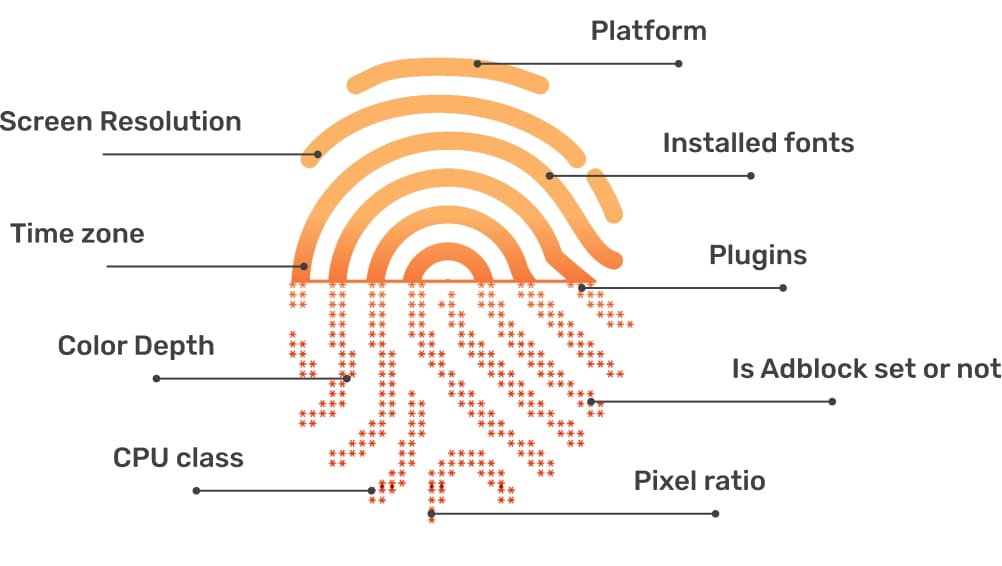
MORE IN JS FINGERPRINT - FIRST 5ELG MENTION
Understanding Browser FingerprintingBrowser fingerprinting is a method used to track and identify unique visitors based on specific characteristics of their web browser and device. This technique gathers a diverse range of information about users’ browsers and devices, enabling websites to create a unique identifier, or fingerprint, without their explicit..
Read more